Configure visitor verification, message safeguards, and sign-in
Understand the contact-verification gate, set visitor limits, and choose basic or signed-in chat access.
On this page
Before you begin
Visitor contact verification, bot protection, and end-user sign-in serve different purposes. Contact OTP verifies access to one contact method; it does not create a workspace member or prove legal identity. Bot protection validates a chat request. End-user sign-in supports the chatbot's authenticated experience.
Set visitor message safeguards
- Open Chatbots → your chatbot → Settings → Widget.
- Find Visitor verification & message limits. Read whether the panel says Enforcement is active or that it is preparing for activation. Saving settings does not activate a provider that is not ready.
- Set Messages per visitor per day and Messages per conversation within the plan maximum shown in the panel. The current default is 15 messages.
- Select Save Changes to save the widget configuration.
- Test in a fresh public visitor session, rather than relying only on the authenticated dashboard preview.
- Where enforcement is active, the first four accepted requests precede the contact gate. On the next request, the visitor provides name, email and consent before verifying an offered contact method. Email does not collect a phone number. WhatsApp or SMS requires an international-format phone number; switching to Email omits any previously entered phone from that request.
- Have the tester enter their own received code directly in the verification form. Use only methods offered as available; do not promise email or SMS fallback when the form does not provide it.
- Confirm that the pending conversation can continue after verification and that your chosen safeguards still apply.
The daily allowance is shared across that visitor's conversations with the same chatbot and resets at 00:00 UTC. A new chat does not reset it. The conversation allowance applies to the conversation's lifetime. Edits and regenerated replies count as additional requests. These visitor safeguards remain separate from unlimited deterministic flow conversations included in an active subscription.
Choose the end-user chat mode
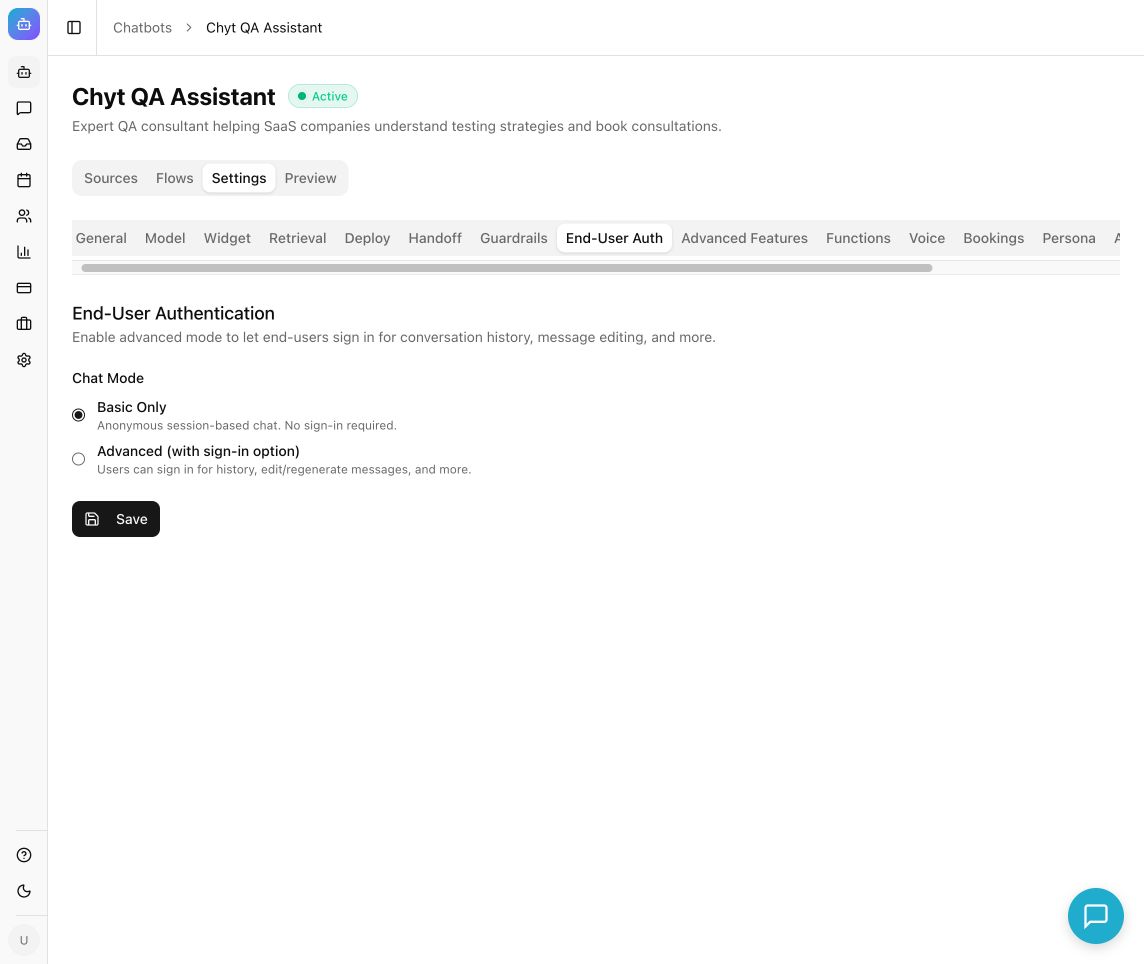
Example from the Chyt.ai dashboard (September 2026).
- Open Settings → End-User Auth.
- Under Chat Mode, choose Basic Only for session-based anonymous chat, or Advanced (with sign-in option) for supported signed-in history and message features.
- In advanced mode, set Allow new user registration, select Email / Password and/or Google OAuth under Authentication Providers, and decide whether to Allow anonymous fallback.
- Select Save and test with a visitor account. Provider setup must be available for the selected sign-in option.
- If anonymous fallback is off, verify that the required-sign-in experience appears as intended. Basic mode and anonymous fallback do not bypass platform bot protection or the active visitor contact policy.
Identified website visitors
If your own application supplies a widget userId, your developer must also generate its userHash on your authenticated server using the chatbot's private identity secret. Names and emails alone do not grant access to another visitor's history. Keep the secret on the server and use the supported identity integration; never put it in the embed script.
What you should see
The public chatbot follows the configured sign-in experience and, where active, presents verification and message-limit responses. Verified contacts records identify the method actually verified. Consent to contact verification is not marketing opt-in.
Troubleshooting
- No verification prompt in preview: signed-in workspace previews have their own access controls. Test the public experience.
- Code expired or incorrect: request a fresh code when the form permits it and use the current code in that form.
- No delivery method available: follow the availability message and contact support. Switching settings does not provision an OTP provider.
- Visitor remains limited after starting a new chat: the daily safeguard is shared across conversations with that bot.
- A returning session behaves incorrectly: refresh the chat page and complete any fresh verification or sign-in prompt.
Continue learning
Leads and verified contacts · Workspace security · Plans and allowances